




Fourth Generation Saki Monkey Arrives
PUBLISHED 29.6.2026
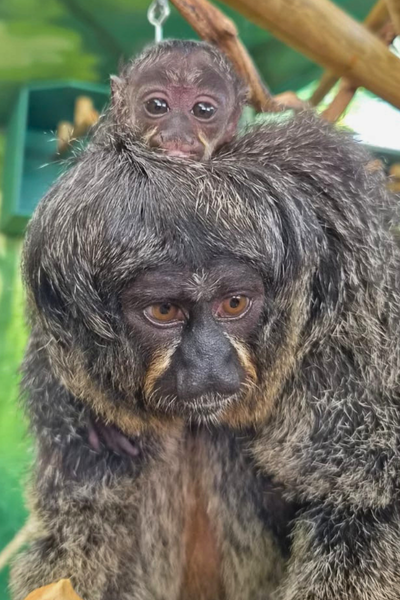
A rare baby saki monkey is making history, becoming the fourth generation of the same saki monkey family to be born here at Drusillas!
The infant arrived on 17th May to first-time parents Twiggy and Pires, cementing our long-standing success in caring for this fascinating primate species.
The remarkable family line stretches back more than 25 years, beginning when female saki monkey Requena arrived at the park in 2000. Requena gave birth to Suri in 2007, who later welcomed daughter Twiggy in 2019. Now, seven-year-old Twiggy has become a mother herself, creating an extraordinary four-generation family tree.
The birth is the latest addition to a bumper year of ’zoo borns’ at Drusillas, following the arrivals of ring-tailed lemurs, a Goeldi's monkey, prairie dog pups, a Black Colombian spider monkey, dwarf mongoose pups and binturong twins.
The baby's father, Pires, only arrived at Drusillas in 2024 from Marwell Zoo as part of the European breeding programme for the species.
For Zoo Manager Mark Kenward, the birth is particularly special. Having worked at Drusillas for more than 28 years, Mark has had the unique privilege of caring for every generation of the family, beginning with Requena when she first arrived at the Park.
"They are just the loveliest monkeys," said Mark. "They're so polite and a little less crazy than some of the other primates we work with! They're incredibly gentle animals. Twiggy is an excellent mum. She and Pires are both first-time parents, but it has all come so naturally to them. Pires is very attentive to both Twiggy and the baby, and it's been wonderful to watch them settle into family life together."
Keepers report that both mother and baby are doing exceptionally well, with Twiggy proving to be calm, confident and protective of her youngster.
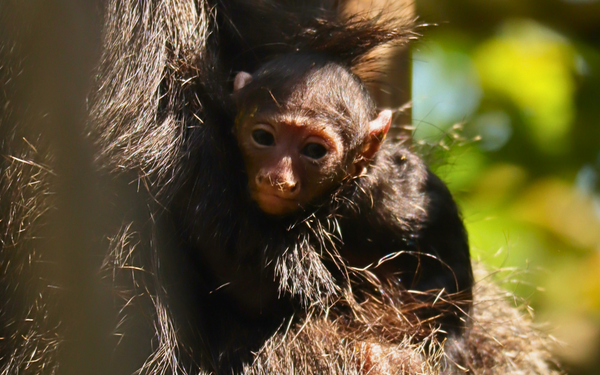
One of the most fascinating things about white-faced saki monkeys is their striking sexual dimorphism - meaning males and females look completely different. When saki babies are born, both sexes initially resemble their mother, with brown-grey fur. As male babies grow, they gradually develop the species' distinctive black coat and bright white face, while females retain their mother's colouring. The differences between the sexes are so dramatic that early naturalists originally believed the males and females were entirely different species.
White-faced sakis are also unusual in the way they carry their young. While many primates carry babies on their belly, back or neck, saki mothers often carry infants on their hip during the earliest weeks of life - a behaviour more commonly associated with humans. Youngsters later graduate to riding on their mother's back as they become more adventurous.
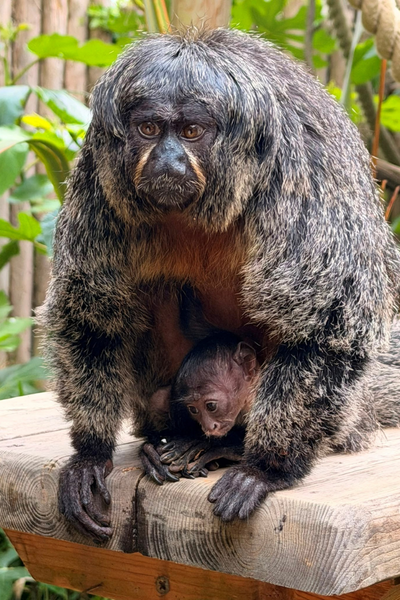
Native to the tropical forests of northern South America, white-faced saki monkeys are found in Brazil, Guyana, Suriname, French Guiana and Venezuela. They spend almost their entire lives high in the rainforest canopy, feeding on fruit, seeds, nuts and insects.
Although white-faced sakis are currently classified as Least Concern by the IUCN, they face increasing pressure from habitat destruction, forest fragmentation, hunting and capture for the pet trade across parts of their range. Modern zoos play an important role in maintaining healthy, genetically diverse populations and helping to raise awareness of the challenges these remarkable primates face in the wild.
"This birth is a lovely reminder of the long-term commitment zoos make to conservation," added Mark. "To see four generations of the same family thriving here at Drusillas is incredibly rewarding. Requena started it all 26 years ago, and now we're watching her great-grandchild grow up. That's really special."
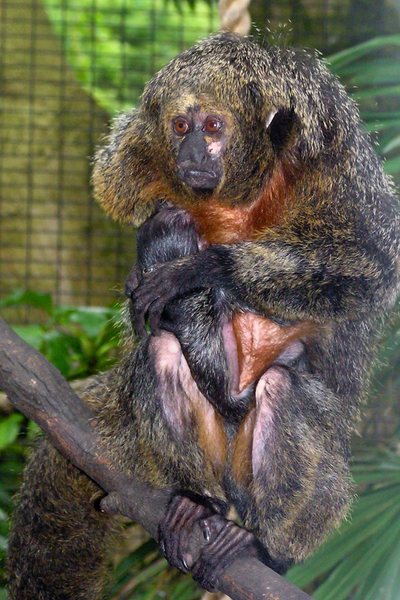
Visitors may be lucky enough to spot the youngster clinging closely to Twiggy as the family spends time exploring their enclosure together. Keepers say the baby is becoming more curious by the day, although it will remain firmly by mum's side for several months yet.
We're inviting you to help choose a name for the newest member of our saki monkey family via our social media channels. One of the names keepers have picked for the new arrival is ‘Requena’ a fitting tribute to the tiny monkey’s great grandmother!